Twisted Hair, Lewis, and Clark
Douglas Hyde (1993)
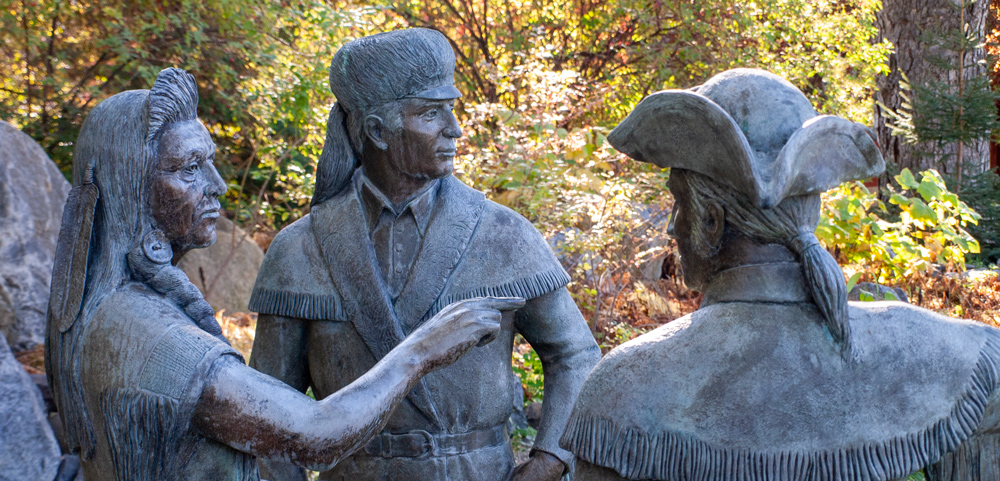
Lewis and Clark State College, 10 October 2009. © Kristopher K. Townsend. Permission to use granted under the Creative Commons Attribution-Share Alike 4.0 International license.
When Clark arrived at the Clearwater River on 21 September 1805, he met Twisted Hair at his fishing camp. Twisted Hair helped Clark locate a canoe-building site, drew maps of the route to the mouth of the Columbia, and along with Tetoharsky, traveled with the expedition to The Dalles. On that journey, he was river guide and interpreter-emissary among the Sahaptian-speaking peoples they encountered.
While they wintered at Fort Clatsop, he managed the Corps’ horses that would take them across the Rocky Mountains. The captains asked him to join them on that return journey, but on 6 June 1806, he declined.
Selections
September 21, 1805
Lolo struggles
by Kristopher K. Townsend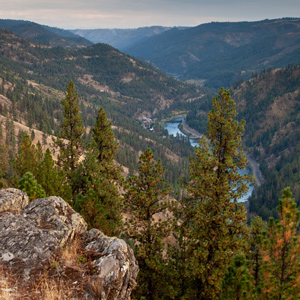
On the Lolo Trail, Lewis and several of his party find themselves “growing weak for the want of food”. At camp on Lolo Creek (Idaho), they have nothing to eat but a “few pheasants” (grouse) and a “prairie wolf” (coyote).
Already in the Clearwater country, Clark descends from Weippe Prairie and visits Twisted Hair’s fishing camp. Pvt. Reubin Field and a Nez Perce man head back to Lewis and the main party loaded with salmon, camas bread, and berries.
September 22, 1805
Bitterroot Mountain triumph
by Kristopher K. Townsend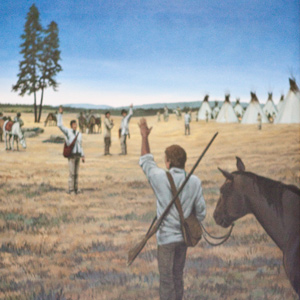
Lewis and the main party receive food sent by some Nez Perce and later arrive at the Weippe villages ‘having triumphed over the Rocky Mountains’. Clark and Twisted Hair climb up from the Clearwater River, and the two captains re-unite. Conversations ensue using Plains Sign Language, and Twisted Hair draws a map of the two rivers that will take them to the Columbia River.
Elsewhere, a large deputation of various Native Nations— organized in part by Lewis—assembles in St. Louis.
September 23, 1805
Nez Perce council
by Kristopher K. Townsend
At the Weippe Prairie villages, the captains hold their first Nez Perce council with a message of “peace and good understanding”. Gifts are given, and trading for food and leather commences. Lewis and two others are sick.
October 5, 1805
Scarcely able to breathe
by Kristopher K. Townsend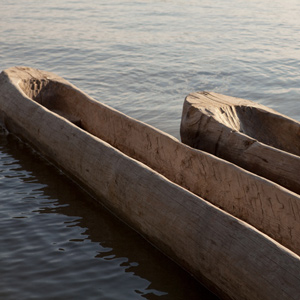
At Clearwater Canoe Camp near present Orofino, Idaho, two new canoes are put in the water, and the horses are rounded up, branded, and given to Nez Perce caretakers. Tetoharsky and Twisted Hair volunteer to guide the expedition down the river. Clark says that their diet of Native roots has them so full of wind that they are ‘scarcely able to breathe’.
October 7, 1805
Down the Clearwater
by Kristopher K. Townsend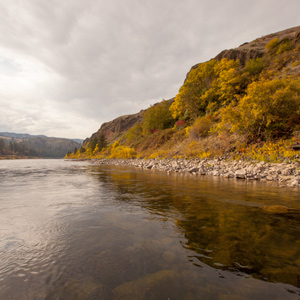
After a busy day, thirty-three expedition members, Lewis’s dog, Seaman, and the two Lemhi Shoshone guides start down the Clearwater River in their five new dugout canoes. This is their first time paddling down a river as a team, and challenging rapids test the boats and paddlers. They camp near present Lenore, Idaho.
October 8, 1805
A canoe accident
by Kristopher K. Townsend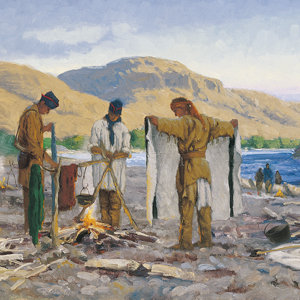
The paddlers navigate numerous rapids as the expedition passes several islands with Nez Perce fishing camps. At one island, guides Twisted Hair and Tetoharsky come aboard. After a canoe accident at the mouth of Colter’s Creek—present Potlatch River—travel abruptly stops.
In St. Louis, General James Wilkinson tells of sick Indian delegates and praises interpreter Pierre Dorion, Sr.
October 14, 1805
'Ship Rock'
by Kristopher K. Townsend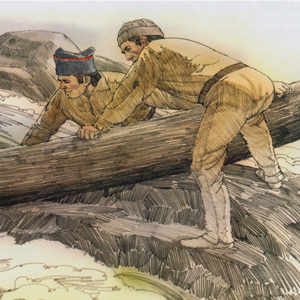
After passing a ‘ ship rock‘—Monumental Rock on the Snake River in Washington—Sgt. Ordway‘s canoe gets stuck on a rock and fills with water. They stop for the day and begin drying wet items.
In Santa Fe, Pedro Vial leaves with orders to prevent the Lewis and Clark Expedition from succeeding.
October 15, 1805
Snake River rapids
by Kristopher K. Townsend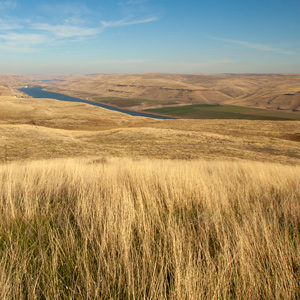
The first half of the day is spent drying items while the hunters and Lewis explore the high plains above the Snake River. Some items must be packed up wet so that they can continue down the river. They pass through several difficult rapids and camp above present Fishhook Rapids.
October 18, 1805
Down the Columbia
by Kristopher K. Townsend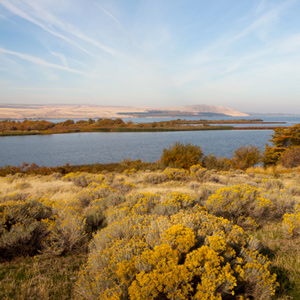
The captains council with the Wanapums and Yakamas and record Sahaptian vocabularies. Clark measures the widths of the Snake and Columbia rivers, and they purchase 40 dogs as a store of provisions. Late in the day, the expedition heads down the Columbia and camps below the Twin Sisters in Wallula Gap.
October 24, 1805
Running the Short Narrows
by Kristopher K. Townsend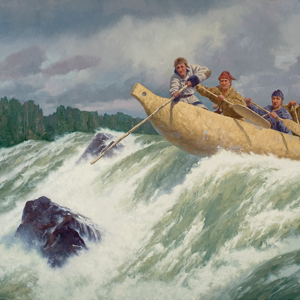
The dugout canoes are safely run down the Short Narrows of the Columbia astonishing the onlooking Indians. Below the narrows, the expedition encounters Chinookan-speaking People, and the two Nez Perce guides know it is time to return home. Several sea otters are shot, and in the evening, Cruzatte plays the fiddle.
October 25, 1805
A "bad whorl & Suck"
by Kristopher K. Townsend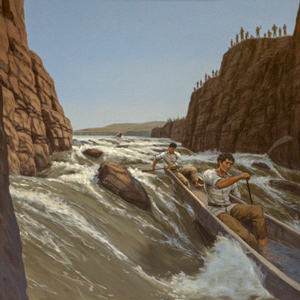
The expedition’s most valuable cargo is carried around the Long Narrows of the Columbia, and then the best paddlers run the rapid in nearly empty canoes. Now out of the Sahaptian-speaking region, the two Nez Perce guides head back home. A camp is established on a high basalt outcrop—in present The Dalles, Oregon—which they would later call Fort Rock Camp.
May 8, 1806
An argument about horses
by Kristopher K. Townsend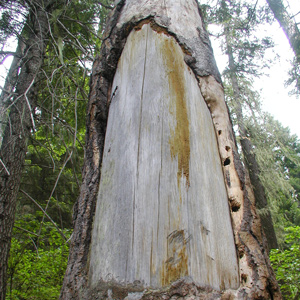
After describing northern shovelers and the Nez Perce methods of feeding on ponderosa pine, the expedition climbs to the Camas plains high above present Idaho’s Clearwater River. Walammottinin, Twisted Hair, and Neesh-ne-park-ke-ook, Cutnose, argue about the expedition’s horses left in their care the previous winter, and Lewis adds the glacier lily to his plant collection.
May 9, 1806
Horses and saddles found
by Kristopher K. Townsend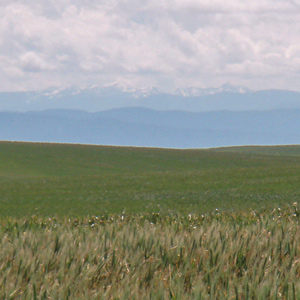
The expedition moves about six miles to Walammottinin’s [Twisted Hair’s] small camp near present Nezperce, Idaho. The horses and saddles that the captains left with the Nez Perce last fall are found, and then, it begins to snow.
In Washington City, arrangements are made to send a sick Osage delegate home.
May 12, 1806
Swallowing objections
by Kristopher K. Townsend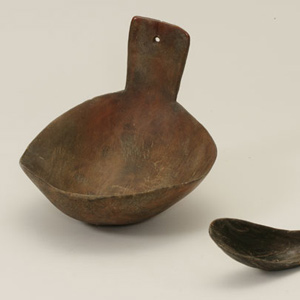
At Lawyer Creek near Kamiah, Idaho, the Nez Perce chiefs share what they heard at yesterday’s council and the People are told to swallow their objections with their mush. The captains then give a gun and ammunition to Walammottinin, Twisted Hair, as payment for watching their horses the previous winter. They also form a plan for crossing the Bitterroot Mountains.
June 1, 1806
Clarkia and rough wallflower
by Kristopher K. Townsend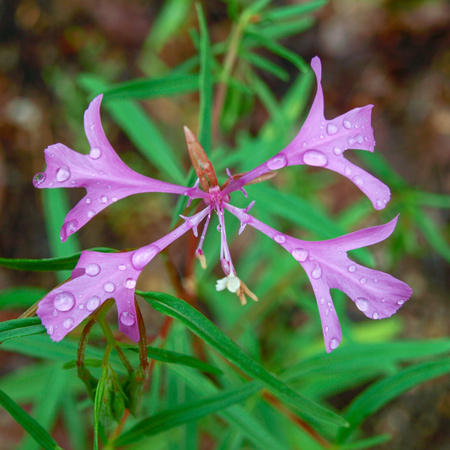
Sgt. Ordway and two privates near Long Camp with their cache of salmon while Charbonneau and Pvt. Lepage return from a “broken voyage”. Clark mentions a plan to divide forces after reaching Travelers’ Rest, and Drouillard is sent to find Nez Perce men to guide them over the mountains. Lewis discusses the Clarkia flower and prepares two more plant specimens.
June 6, 1806
Still no guides
by Kristopher K. Townsend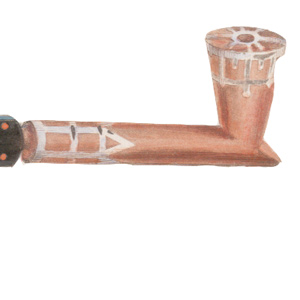
Clark leaves Long Camp to visit Tunnachemootoolt’s (Broken Arm’s) village where he repeats a diplomatic speech and asks for guides. He is given two peace pipes—one for him and the other for the Shoshones. On the way back, he meets Walammottinin (Twisted Hair) who relays more discouraging news. Lewis describes the western tanager and makes celestial observations.
Experience the Lewis and Clark Trail
The Lewis and Clark Trail Experience—our sister site at lewisandclark.travel—connects the world to people and places on the Lewis and Clark Trail.
Discover More
- The Lewis and Clark Expedition: Day by Day by Gary E. Moulton (University of Nebraska Press, 2018). The story in prose, 14 May 1804–23 September 1806.
- The Lewis and Clark Journals: An American Epic of Discovery (abridged) by Gary E. Moulton (University of Nebraska Press, 2003). Selected journal excerpts, 14 May 1804–23 September 1806.
- The Lewis and Clark Journals. by Gary E. Moulton (University of Nebraska Press, 1983–2001). The complete story in 13 volumes.
This site is provided as a public service by the
Lewis and Clark Trail Alliance
with additional funding from the following: