Lewis nears the Falls of the Ohio where William Clark awaits, but strong headwinds continue to slow progress. Settlements become more frequent, and a two-mile-long island hosts cattle, hogs, and turkeys. Also appearing on this stretch of the river are giant cane plants and mosquitoes.
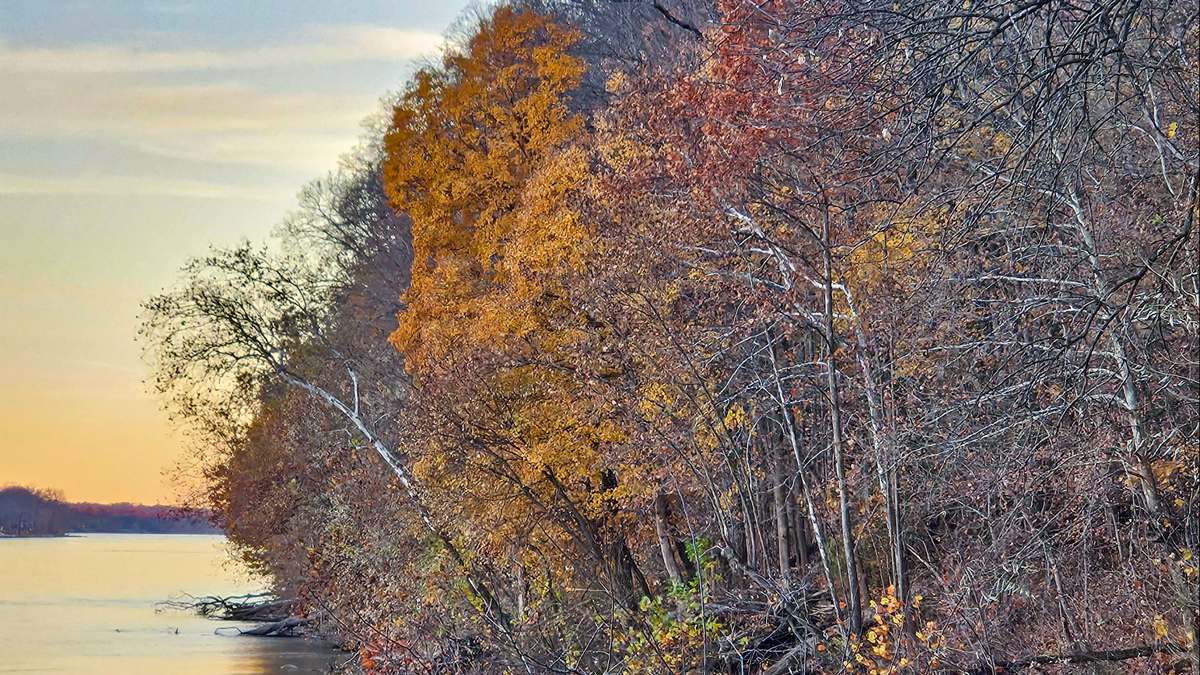
‘Hog Island’
At 5 o’clock we passed the above island, it being, including the bars above and below, about two miles long; but it is a young island. The wood on it being small, we saw cattle, hogs, and turkies on it, and as the hogs were most numerous, we call it Hog Island.
—Thomas Rodney, 13 October 1803[1]Dwight L. Smith and Ray Swick, ed., A Journey Through the West: Thomas Rodney’s 1803 Journal from Delaware to the Mississippi Territory (Athens: Ohio University Press, 1997), 118.
Giant Cane
Arundinaria gigantea
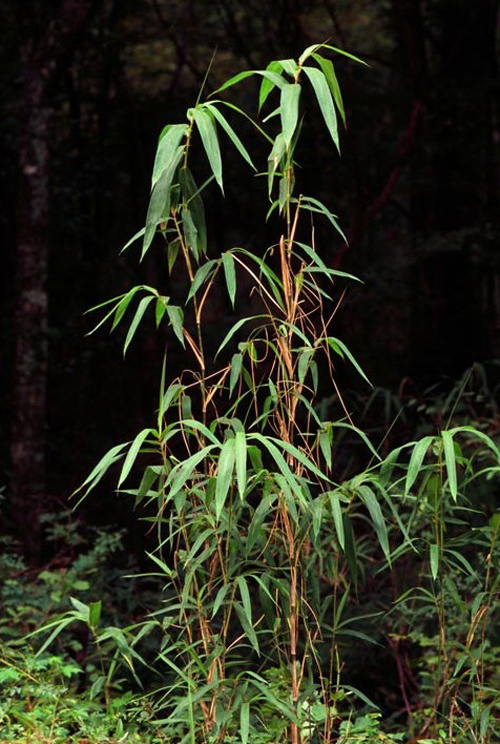
Image licensed under the Creative Commons Attribution-Share Alike 3.0 Unported license.
Mosquitoes Appear
The first musketo I have seen I killed just now. We have not been troubled on the river or on shore with insects of any kind.
—Thomas Rodney, 13 October 1803[2]Ibid.
Strong Headwinds
[S]et down to row ten miles to forward us to Louisville; but the breaze is fresh and still head as usual, tho we expected a change yesterday and day before.
—Thomas Rodney, 14 October 1803[3]Thomas Rodney, Journals, 118–119.
Giant Cane
We went on shore about midway of the last island to see the cane, or reed, growing, for here we met with the first of it; but it is small, growing only ten or 12 ft. high.
—Thomas Rodney, 15 October 1803[4]Thomas Rodney, Journals, 120.
Experience the Lewis and Clark Trail
The Lewis and Clark Trail Experience—our sister site at lewisandclark.travel—connects the world to people and places on the Lewis and Clark Trail.
Plan a trip related to October 13, 1803: